
Obtaining a Certificate of Employment (COE) is among the most essential procedures in maintaining a professional and legal history, in case of working in Saudi Arabia. This document can be used as the official evidence of your working experience, whether you are being hired in a new position, applying for a visa, a bank loan, or your future departure.
As an expat and employee, you will find in this guide how to save time and other inconveniences to have your certificate on time and without stress.
What is a Certificate of Employment?
A Certificate of Employment is a documented form that is granted by your employer, and it encompasses:
- Your job position
- Employment duration
- Salary details
- Company information
It is typically typed on company letterhead and signed and stamped.
Types of Employment Certificates in Saudi Arabia
There are several types depending on your need:
- Employment Certificate: To those employees who are currently working.
- Experience Certificate: For previous jobs.
- Salary Certificate: Focuses on income details.
- Service Certificate: Issued when leaving a company
Read Also: New Iqama Rules in Saudi Arabia 2026 for Expats
Method 1: via the Qiwa Website
This is the quickest, simplest, and most formal way of obtaining your Certificate of Employment in Saudi Arabia. Do the following simple steps:
Step-by-Step Process
1. Log in to your Qiwa account
Go to the Qiwa platform and sign in with your ID/Iqama number and password, or through the Nafath app. This verifies your identity as an employee.

2. Go to “Services.”
After logging in, navigate to the Services section where all available employee services are listed.
3. Click on “Employment Certificates.”
Find and select the Employment Certificates option. This is the section dedicated to requesting your certificate.
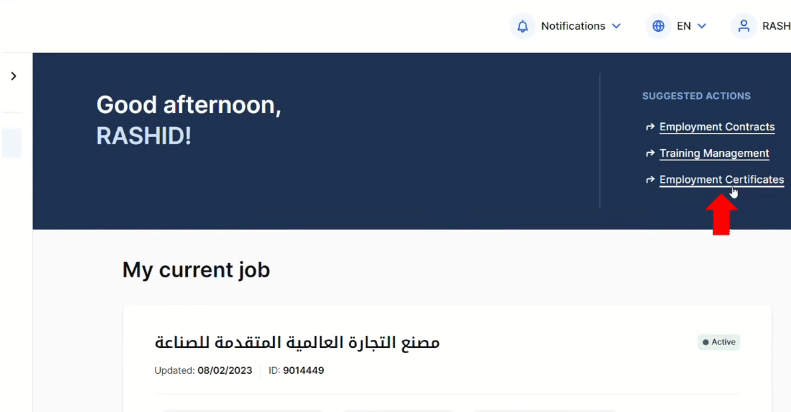
4. Select “Request New Certificate.”
Click on this option to start a new request. This opens the application form.
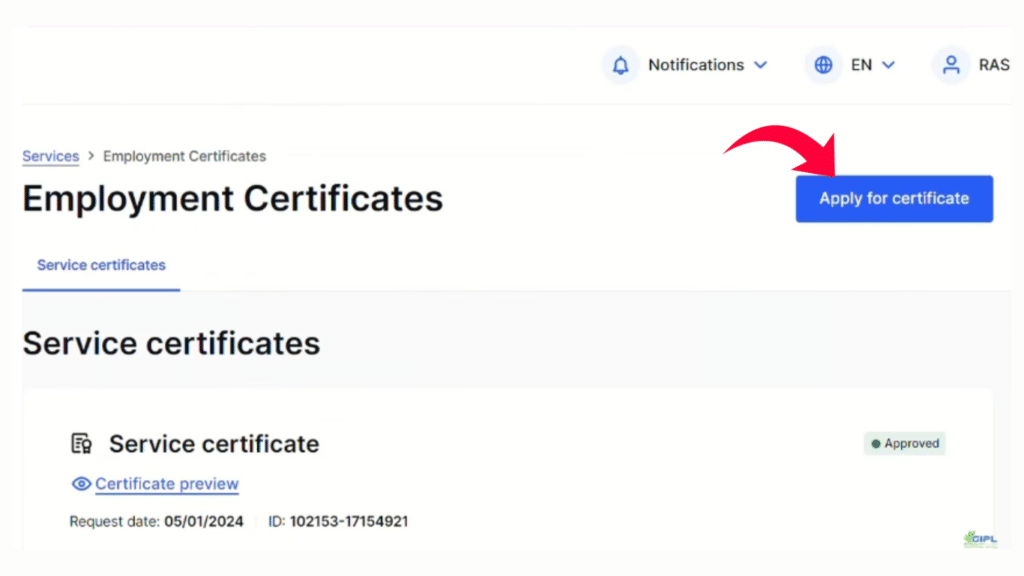
5. Choose certificate type
Choose the kind of certificate required (e.g., employment, experience, or salary certificate).
6. Select your employer/job
If you’ve worked with multiple employers, choose the correct company and job role.

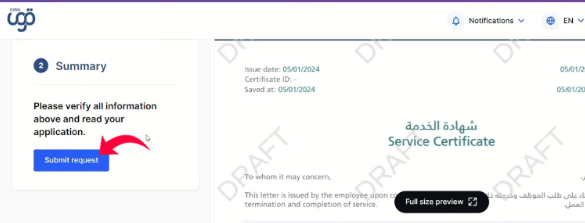
7. Submit the request
Check the information and place the request with the help of the system.
8. Wait for employer approval
For a salary certificate, your employer (HR) gets the request and has to verify it first. Experience certificates normally download right away.
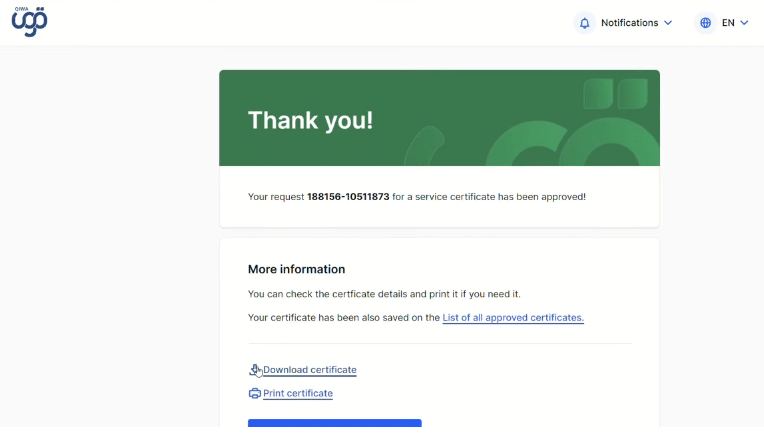
9. Download your certificate
Once approved, you can download your Certificate of Employment directly from Qiwa.
Processing Time
Experience certificates are instant; salary certificates depend on how quickly HR verifies them (often a day or two), depending on the speed at which your employer accepts the request.
Cost
Completely free of charge through Qiwa.
Alternative Method: Request from Employer
If you’re leaving and HR is dragging its feet, the law is on your side. Article 64 of the Saudi Labour Law says your employer must give you a service certificate free of charge when your contract ends, if you ask for it. It has to show your start and end dates, your job title and your last wage – and it can’t include anything that damages your reputation or your chances of getting another job.
If you prefer the manual method:
Steps:
- Contact the HR department
- Send a formal request email
- Mention purpose (job, visa, etc.)
- Wait for issuance
Required Information in the Certificate
Your certificate must include:
- Company name and logo
- Employee’s full name
- Job title
- Employment start and end date
- Salary details (if required)
- Company stamp
- Authorized signature
If any of these are missing, the organisation receiving it may refuse to accept it.
Do You Need Attestation?
You may need attestation if you are using the certificate:
- Outside Saudi Arabia
- For immigration purposes
- For embassy submissions
Attestation Authorities:
- Ministry of Foreign Affairs (MOFA)
- Saudi Embassy
- Home country authorities
Common Mistakes to Avoid
Avoid these errors to prevent rejection:
- No company stamp
- Incorrect job title
- Missing salary details
- Wrong employment dates
- Not using official letterhead
- No Arabic version (important in KSA)
Frequently Asked Questions (FAQs)
1. What is a Certificate of Employment in Saudi Arabia?
A Certificate of Employment (COE) is a personal document issued by your employer that states your employment, salary, and the period of employment. It is widely applied in the workplace, visas, and finances.
2. What is the way that I can obtain a Certificate of Employment in Saudi Arabia?
You may have it two ways:
- By Qiwa Platform (fastest/free way)
- By asking them to do it directly to your employer or HR department.
3. Does Saudi Arabia have a free Certificate of Employment?
Yes, it is totally free when you request it via the Qiwa platform.
4. What is the time taken to obtain the certificate?
This will take an experience certificates are instant, while salary certificates usually take a day or two, depending on how quickly HR verifies them, depending on the speed of your employer to approve the request.
5. Can I get the certificate without the consent of the employer?
Only for salary certificates. For a salary certificate, yes – your employer has to verify it on Qiwa. Experience certificates for jobs registered on Qiwa are usually issued straight away, without HR approval.
Read Also: How to Check STC Balance Instantly (*166# Code Guide)
Changing jobs? Our guides show how to check your Iqama transfer status and change the profession on your Iqama. If you’re heading to the UAE next, here’s how to get a certificate of employment in the UAE.
Heading into interviews for a new job? See our guide on preparing for a job interview.
Final Words
This guide has included all that you require, whether it be step-by-step techniques or professional advice and pitfalls to avoid. By following these steps, you will not only save time but also be sure that your certificate will be accepted to any official purpose.
Use your Certificate of Employment as a key to your professional record that can open some doors to new working opportunities, financial services, and global procedures.