Last updated: September 2026 – renewal periods, domestic worker rules, biometrics and fines updated.
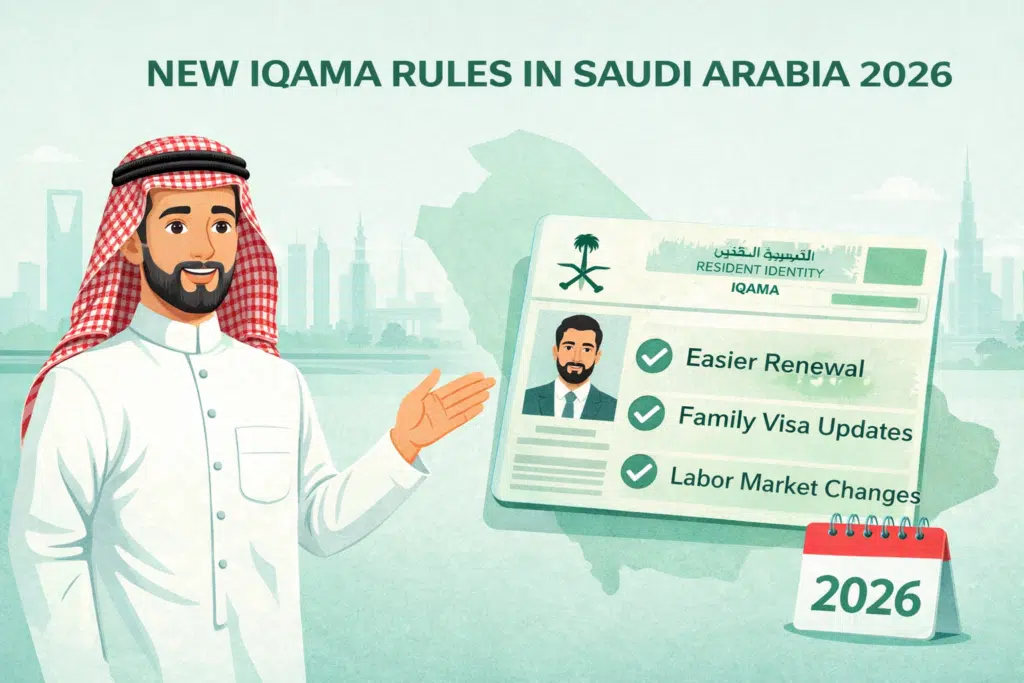
Do you find the new Iqama regulations in Saudi Arabia and their implication on expatriates a puzzle in 2026? Foreign workers and residents would prefer to know the new rules concerning the renewal, electronic services, fines, and legal adherence. Saudi Arabia has, in the past few years, modernized its residency system to enhance efficiency, tighten compliance, and make services easier for expatriates. The official residency permit of foreign workers, called the Iqama (Saudi residence permit), has gone through a number of regulatory revisions.
Within the scope of this guide, I will clearly discuss the new Iqama regulations in Saudi Arabia in 2026 in terms of flexibility in renewal, the compulsory conditions, online services, and the duties of the employers.
What Is an Iqama in Saudi Arabia?
An Iqama is officially known as an official residency permit for foreigners residing and working in Saudi Arabia. It is used as a national identification card of the expatriates, and it is issued by the Ministry of Interior, via the immigration department, the General Directorate of Passports.
Expatriates can:
- Legally work in the employ of their employer.
- Open bank accounts
- Rent accommodation
- Access hospitals and healthcare
- Register mobile SIM cards
Expatriates can be fined, restricted in the services offered, or deported without a valid Iqama.
New Iqama Rules
Flexible Iqama Renewal Periods
Domestic workers got the same flexibility in July 2026. Sponsors of housemaids, drivers and similar workers used to renew for one or two years at a time; now they can pick any period from three months up to 24 months, in three-month steps, directly on Absher. It’s linked to the Musaned platform and the government fees are calculated for the period you choose – handy if your helper’s contract is short.
In the new regulations, one of the largest changes is the introduction of the flexibility of renewal.
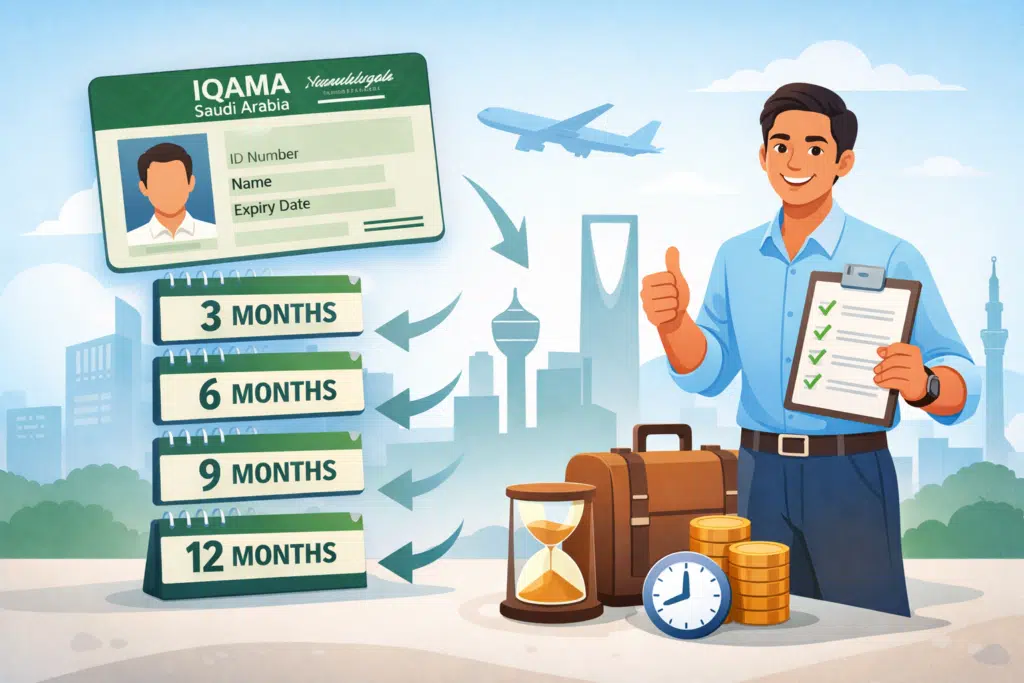
Iqamas used to be renewed a year at a time. Since 2021, private-sector employers have been able to renew for shorter spells of 3, 6 or 9 months, paying fees only for the period chosen.
New renewal options include:
- 3 months
- 6 months
- 9 months
- 12 months
This flexibility enables businesses to handle the contracts of the workforce more effectively and saves that which is not needed when entering into long-term contracts for short-term employment.
Digital Iqama Services
The countrywide increase in digital government services has been massive in Saudi Arabia.
The majority of the services which are related to residency are now done online via the Absher Platform and other government portals.
If you’re accessing platforms like Absher from outside Saudi Arabia or facing regional restrictions, using Planet VPN can help ensure smooth and secure access to these official services.
These platforms can be used by residents and employers to:
- Renew Iqama permits
- Check residency status
- Apply for an exit and re-entry visa.
- Update passport details
- Pay government fees
- Report lost Iqama cards
The paperwork is cut down by this digital transformation, and there is no need to visit the immigration offices quite often.
Mandatory Health Insurance for Renewal
The other significant rule that has been enforced in recent years is the necessity of valid medical insurance.
Under the new regulations:
- Without active health insurance, there is no possibility of renewing the iqama.
Your health policy has to be active and showing in the government system before the renewal request will go through.
Why Health Insurance Is Required
The policy will guarantee access to medical services to expatriates and eliminate congestion in hospitals.
In the majority of cases, insurance covers:
- Medical consultations
- Emergency treatment
- Hospitalization
- Prescribed medications
Health insurance is normally included in the employment package by the employer.
Biometric Registration Required
This has also been enhanced in Saudi Arabia because of its identity verification system.
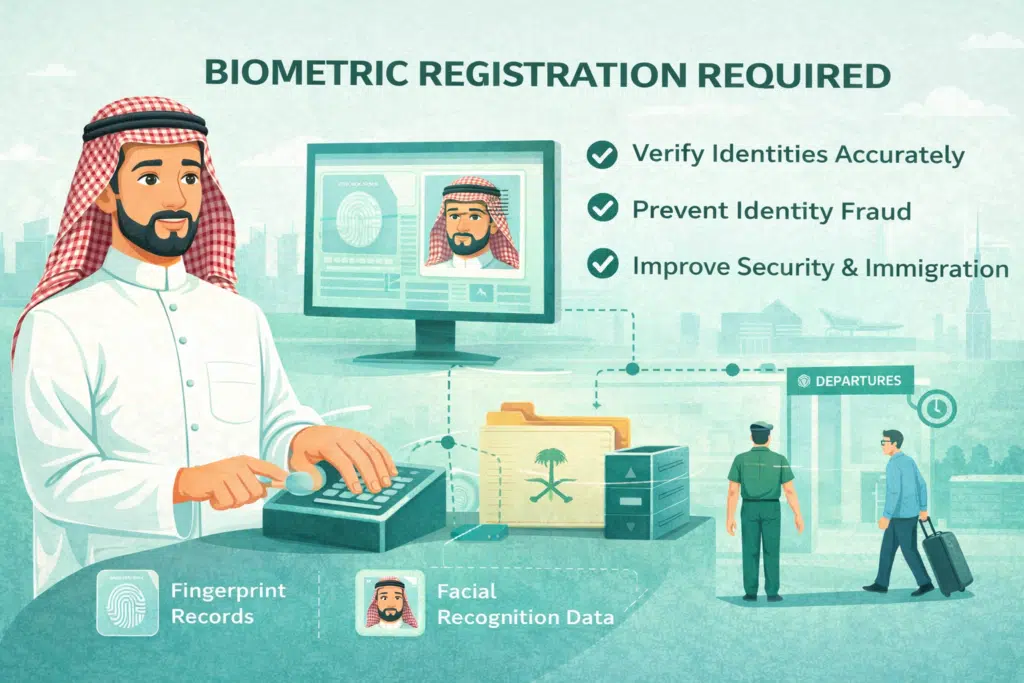
Biometric registration is now mandatory for all residents, and it includes:
- Fingerprint records
- Facial recognition data
This requirement applies to:
- Primary workers, plus dependants aged six and over
- Dependent benefits include spouses and children.
Purpose of Biometric Data
Biometric data assists the authorities:
- Verify identities accurately
- Prevent identity fraud
- Enhance security and immigration control.
When renewing or registering for the first time, the biometric data is registered in government databases.
Read Also: Border Number Not Showing? Saudi Absher Fix
Self-Deportation Option for Violators
The Saudi authorities have offered an option of a self-deportation approach to the people who are staying in the country illegally. The expatriate who has breached the regulations governing residency can be allowed to leave the country voluntarily after a well-designed procedure.
Benefits of Self-Deportation
This system will enable violators to:
- Get out of the country without protracted court cases.
- Detention should be avoided in certain cases.
- Settle their case through Jawazat rather than wait to be caught at an inspection.
Nevertheless, the conditions can be applicable based on the violation.
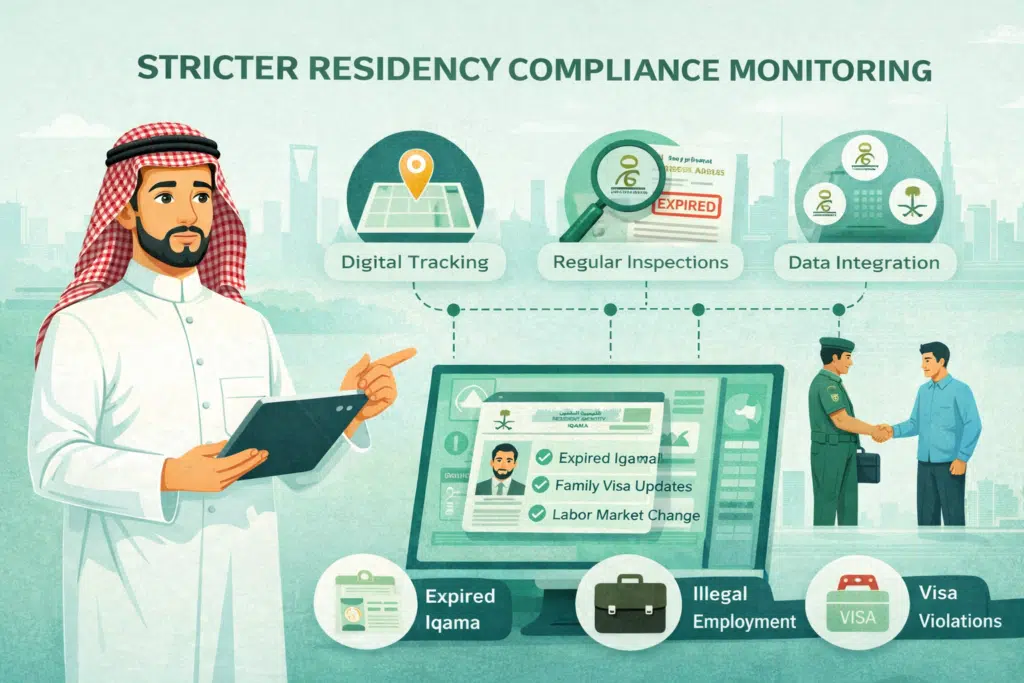
Stricter Residency Compliance Monitoring
Saudi Arabia has also enhanced surveillance to make sure the residents adhere to the immigration regulations.
Authorities now use:
- Digital tracking systems
- Regular inspections
- Government interdepartmental data integration.
The monitoring assists in identifying problems like:
- Expired Iqama permits
- Illegal employment
- Visa violations
It is highly recommended that the residents maintain their documents at all times.
Skill-Based Work Permit Classification
The other innovation is the implementation of skill-based classifications of the foreign workers.
The workers are classified in terms of their:
- Qualifications
- Professional skills
- Job roles
The purpose of this classification system is to assist the government:
- Enhance labor market regulation.
- Adjust foreign labor to the economy.
- Improve the productivity of the workforce.
It is the role of employers to make sure that workers are enrolled in the appropriate occupational group.
Employer Responsible for Iqama Renewal
According to the labor laws in Saudi Arabia, the Iqama is managed by the employer or sponsor.
This includes:
- Issuing the first Iqama
- The renewal of the permit before expiry.
- Updating of worker information.
In case the employer neglected to renew the Iqama, they can be punished with fines or a court case.
This is why the businesses should be watchful of the expiration dates and do renewals on time.
Unpaid Fines Must Be Cleared Before Renewal
The other rule, which is crucial, is that before Iqama is renewed, all the fines that are due must be paid. These fines may include:
- Traffic violations
- Government penalties
- Other legal charges
The renewal system automatically verifies the record of the resident. In the event of unpaid fines, the renewal request will be blocked until the payment is done.
This policy will help citizens to be well law-abiding.
Passport and Work Permit Must Be Valid
In order to renew an Iqama successfully, there are a number of requirements that must be followed.
Two key requirements are:
- The resident should possess a valid passport.
- The employee should possess a working permit.
In case any of the documents are out-of-date or invalid, the renewal process cannot be conducted.
Required Conditions for Renewal
In general, the following should be valid:
- Passport
- Work permit
- Medical insurance
- Biometric registration
- Paid fines
When these requirements are satisfied, it would avoid delays in renewal.
Frequently Asked Questions
What is the new Iqama Saudi Arabia 2026?
The new regulations involve the introduction of flexible renewal time, compulsory health insurance, biometric registration, digital registration services, the division of jobs according to skills, and increased compliance control.
Can I renew my Iqama online?
Yes. The bulk of Iqama services can be done online through the government websites like Absher.
Who should do the Iqama renewal?
In the majority of situations, the employer/sponsor issues and renews the residency permit of the employee.
What happens if my Iqama expires?
Renewing late means a SAR 500 fine the first time and SAR 1,000 the second, and a third offence can lead to deportation.
Am I supposed to renew my health insurance? Are they doing Iqama?
Yes. The renewal request should have valid medical insurance before approval.
Read Also: Police Clearance Certificate in Saudi Arabia (PCC Guide)
Putting these rules into practice? Start with our guides on renewing your Iqama, the full Iqama renewal fee breakdown, and checking your company’s Nitaqat colour, which affects what your employer can do for you.
Final Thoughts
The new Iqama rules in Saudi Arabia 2026 are a significant milestone towards the enhancement of the residency management system in Saudi Arabia. Saudi Arabia is developing a more efficient and transparent immigration system by introducing digital services, opportunities to renew the period, biometric verification, and more intense monitoring of compliance.
When expatriates reside in the Kingdom, they must find out the meaning of these new laws so that they do not risk being convicted of violating the law.