
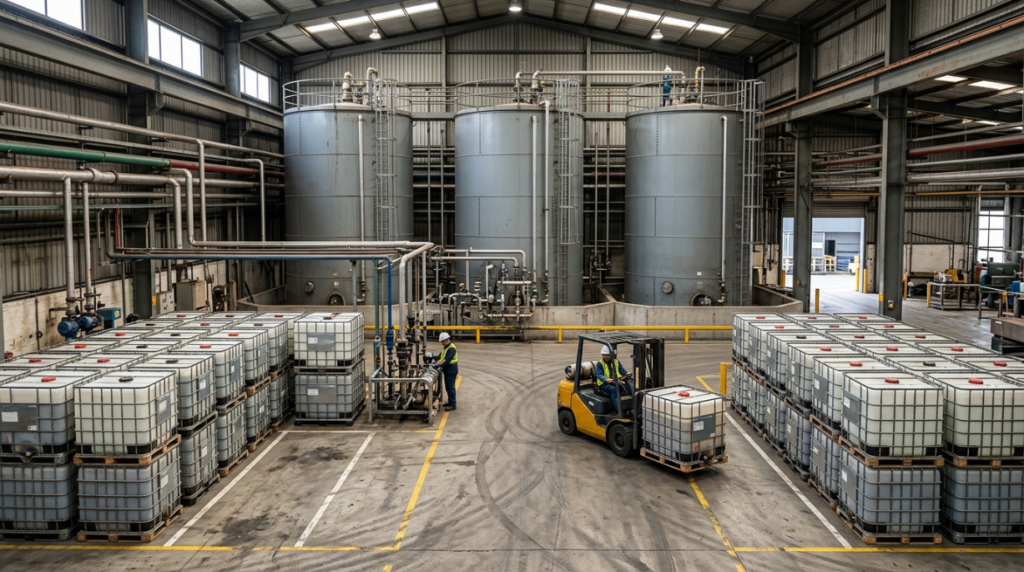
Storing large amounts of liquid in an industrial facility requires more than simply choosing a large container. The right solution should fit the product, available space, handling process, and safety needs of the site.
The right bulk liquid storage solution depends on the type of liquid, storage volume, container material, available space, handling equipment, and required safety measures. Businesses should also consider cleaning, maintenance, transport, and future demand.
A careful review of these factors can help facilities choose a storage system that is safe, practical, and cost-effective.
Key Factors to Consider When Choosing Bulk Liquid Storage
1. Identify the Type of Liquid Being Stored
The type of liquid is one of the first factors to consider when selecting a storage solution. Water, chemicals, oils, food products, and other liquids can have very different storage needs.
Some liquids may react with certain container materials, while others may require special protection from heat or contamination.
Businesses should check the liquid’s properties before choosing a container. Factors such as acidity, temperature, viscosity, and chemical content can affect the right choice. Understanding the product first helps prevent leaks, contamination, and damage to the storage system.
2. Determine the Required Storage Capacity
Storage volume should match the amount of liquid the facility needs to hold. A business that stores high volumes may need fewer large containers instead of many smaller units. However, the available space and handling process must also be considered.
An IBC tank can be useful for many industrial applications because it provides a large storage capacity while keeping a relatively compact footprint.
Procurement teams should review current stock levels, delivery schedules, and expected demand before selecting container sizes. This helps avoid both overcrowding and unused storage capacity.
3. Consider the Available Warehouse Space
The physical layout of an industrial facility has a direct effect on storage choices. Businesses should measure available floor space, ceiling height, aisle width, loading areas, and access points before installing containers.
Storage units should not block emergency exits, equipment, or important work areas. Vertical space may offer additional capacity when suitable stacking or racking systems are available.
However, containers should only be stacked when their design allows it. A good layout should provide enough room for safe movement while making efficient use of the available warehouse area.
4. Check Container Material and Compatibility
Container material needs to match the liquid being stored. Different liquids can affect plastics, metals, seals, valves, and other components in different ways. Procurement teams should check manufacturer specifications and compatibility information before making a purchase.
The material should also be able to handle the expected storage temperature and working conditions. Choosing the wrong material can lead to weakening, leaks, or product contamination.
A suitable container should provide reliable protection throughout its intended service life. Material selection should therefore be based on both the liquid and the operating environment.
5. Review Handling and Movement Needs
Industrial facilities often move liquid containers several times during receiving, storage, production, and shipping. The storage solution should work with the forklifts, pallet trucks, pumps, and other equipment already used at the site.
Containers should have suitable access points for safe lifting and movement. Their weight when full should also be considered. A storage system that is difficult to move can increase labor time and create safety risks.
Planning the movement process before installation can help businesses reduce unnecessary handling and make daily warehouse operations smoother.
6. Plan for Safe Liquid Transfer
The way liquid enters and leaves a container is another important consideration. Businesses should review the type of valves, outlets, hoses, pumps, and fittings needed for the product.
These parts should be compatible with the storage container and the facility’s existing equipment. Easy access can make filling and emptying faster while reducing unnecessary handling.
The transfer area should also provide enough room for workers to connect equipment safely. A well-planned transfer system can reduce spills and improve production flow. It can also make routine inspections easier for warehouse staff.
7. Consider Spill Control and Containment
Liquid storage areas should be designed with spill prevention and containment in mind. Even a strong container can develop a leak because of damage, incorrect handling, or equipment failure.
Secondary containment can help prevent spilled liquid from spreading to other parts of the facility. The exact system will depend on the type and quantity of liquid being stored.
Businesses should also keep suitable spill response equipment close to storage areas. Good containment planning protects workers, equipment, floors, and nearby products while helping facilities respond quickly when a leak occurs.
8. Check Safety and Compliance Requirements
Storage requirements can vary depending on the liquid, facility, industry, and local rules. Businesses should identify whether the product is hazardous, flammable, corrosive, or subject to other controls.
The selected containers should meet the requirements that apply to their intended use. Labels, closures, ventilation, fire protection, and emergency access may also need attention. Procurement and safety teams should work together before purchasing storage equipment.
Checking these requirements early can prevent costly changes later. It also helps ensure that the storage area supports safe working practices from the beginning.
Operational Factors That Affect the Storage Choice
1. Think About Cleaning and Maintenance
A storage system needs regular inspection and maintenance to remain reliable. Businesses should consider how easily containers can be cleaned, checked, repaired, or replaced.
This is especially important when the same containers are used for different products or when contamination must be avoided. Workers should have enough access around the storage units to carry out inspections safely.
Maintenance schedules should also include valves, seals, fittings, racks, and containment systems. Choosing equipment that is easy to maintain can reduce downtime and help extend the useful life of the storage system.
2. Consider Storage and Product Movement Frequency
Not every liquid needs the same storage arrangement. Products that are used every day may need to stay close to production or transfer areas. Materials that move less often can be placed in areas that are harder to access.
Businesses should study how frequently each liquid is received, stored, and removed. This information can help determine the best location for each container.
A storage plan based on movement patterns can reduce forklift travel and worker effort. It can also make busy areas less crowded and improve overall warehouse flow.
3. Plan for Future Business Needs
Industrial storage needs may change as production increases or new products are added. Businesses should avoid selecting a system that only meets today’s requirements if growth is expected.
Future demand, additional production lines, seasonal stock increases, and changes in packaging should be considered. Flexible storage systems may allow facilities to add or move containers without major construction work.
At the same time, businesses should avoid buying excessive capacity that remains unused. Planning for reasonable growth can provide a balance between current efficiency and future flexibility.
4. Compare the Total Cost of Ownership
The purchase price is only one part of the cost of a bulk liquid storage system. Businesses should also consider delivery, installation, handling, cleaning, maintenance, repairs, replacement, and disposal.
A cheaper container may require more frequent replacement or create higher handling costs. A higher-quality solution may cost more initially but provide better long-term value.
Procurement teams should compare different options based on their expected service life and operating needs. Looking at the total cost can help businesses make a better decision instead of choosing equipment based only on its initial price.
Conclusion
Choosing the right bulk liquid storage solution requires careful planning. Businesses should consider the type of liquid, required capacity, available space, container material, handling equipment, transfer process, spill control, and safety requirements.
Cleaning, maintenance, product movement, future growth, and total operating costs should also be part of the decision. A storage system that fits both the product and the facility can improve efficiency while reducing safety risks and wasted space.
By reviewing these factors before purchasing, industrial facilities can build a storage setup that supports reliable and efficient daily operations.