
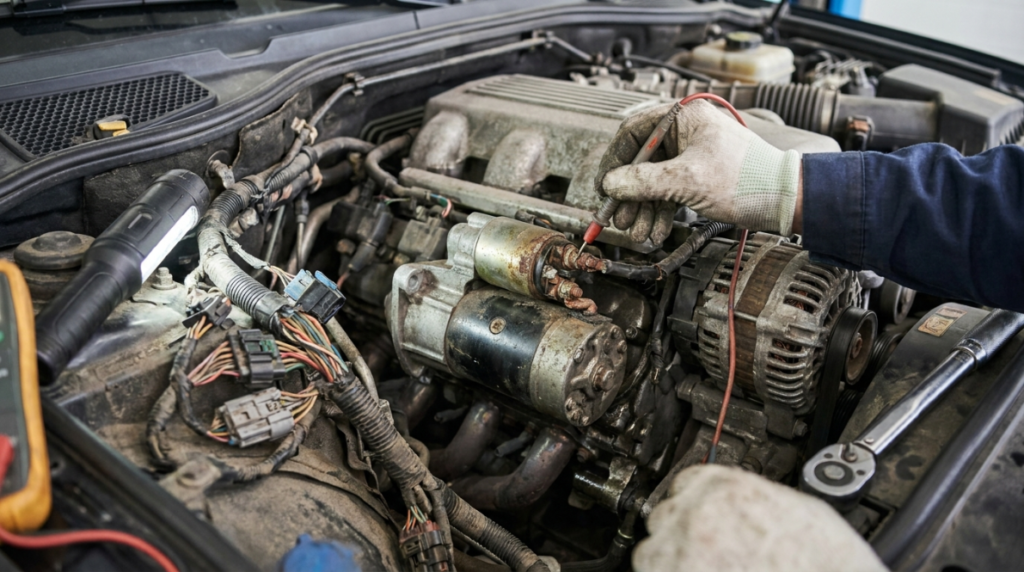
A slow crank can be frustrating when your SUV has a relatively new battery. A new battery does not always mean the starting system is healthy.
A weak starter motor can struggle to turn the engine at normal speed. Corroded battery cables or poor ground connections can also reduce the power reaching the starter.
A hidden electrical drain may leave the battery partly charged, while a weak alternator can fail to restore its power during driving. Thick engine oil or extra mechanical resistance can also make starting harder.
Common Electrical Causes of Slow Cranking
The starting system needs a strong flow of electricity from the battery to the starter motor. When that flow is blocked, the engine may turn slowly even though the battery is fairly new. Loose connections, damaged cables, poor grounding, and charging faults can all create this problem.
Modern luxury SUVs have many electrical parts, so even a small fault can affect starting performance. Checking the full starting circuit is more useful than simply replacing the battery again.
1. A Weak or Failing Starter Motor
The starter motor is responsible for turning the engine when you press the start button or turn the key. Over time, its internal parts can wear out. Worn bearings, damaged brushes, or problems inside the motor can increase resistance and make it draw more current.
The result is often a slow, heavy cranking sound. If the SUV starts normally when cold but cranks slowly after a long drive, heat may be affecting the starter. A starter test can confirm whether it is using more power than it should.
2. Corroded Battery Cables
Battery terminals may look clean while corrosion is building inside the cables or at hidden connection points. This creates resistance and limits the amount of current that can reach the starter.
Long power cables can make this issue more important in some high-end SUVs because the battery may be located away from the engine bay. Even a small amount of resistance can cause a noticeable voltage drop during starting.
A technician can inspect the positive cable, ground cable, engine ground strap, and other major connection points.
3. Poor Ground Connections
The starter needs a complete electrical path to work correctly. A weak ground strap between the engine and vehicle body can interrupt this path and make the starter turn slowly. Rust, dirt, corrosion, or a loose connection can all create high resistance.
This problem can be difficult to find because the battery itself may test as healthy. A voltage drop test during cranking can help locate the weak point.
If the ground side shows excessive voltage loss, cleaning or replacing the damaged connection may solve the slow-start problem.
4. A Hidden Parasitic Electrical Draw
A relatively new battery can still become weak if something continues using electricity after the vehicle is switched off. This is known as a parasitic draw. Luxury SUVs contain many control units, security systems, sensors, tracking devices, screens, and comfort features.
If one module fails to enter sleep mode, it may continue drawing power overnight. The next morning, the battery may have enough energy to operate lights and electronics but not enough strength to turn the engine quickly.
5. Battery Management System Problems
Many modern SUVs use a Battery Management System to monitor battery condition, charging, and power use. When a replacement battery is installed, some vehicles require the new battery to be registered or coded with a diagnostic tool.
If this step is skipped, the charging system may not manage the new battery correctly. The battery can then remain undercharged even though it is physically new.
If your SUV recently received a replacement battery and still cranks slowly, ask whether the battery was properly registered with the vehicle’s computer.
6. Charging System Problems Can Keep a New Battery Weak
A battery depends on the alternator to restore the power used during starting and while the vehicle is running. If the alternator or voltage regulator is not working correctly, the battery may remain partly charged.
This can cause slow cranking even when the battery has only been installed recently. Warning lights, dim lights, electrical faults, or repeated starting problems may point toward a charging issue.
Testing the charging voltage while the engine is running can help determine whether the alternator is providing the required output.
7. Incorrect Engine Oil Can Increase Starting Load
Engine oil also affects how easily the engine turns during startup. Oil that is too thick for the conditions can create extra resistance, making the starter work harder.
This issue is more common in cold weather, but using the wrong oil grade can still cause problems in other conditions. Always follow the oil viscosity recommended for the specific engine.
If an oil change was recently completed and slow cranking started afterward, it is worth checking that the correct grade was used. The right oil helps the engine turn more freely.
8. Extra Mechanical Resistance Can Slow the Engine
Sometimes the starter and electrical system are not the main problem. A mechanical issue can make the engine harder to turn. A failing belt-driven component, such as an alternator bearing or air conditioning compressor, may create extra drag.
Internal engine problems can also increase resistance, although these are less common. If the starter is known to be healthy but the engine still turns slowly, a technician may check for unusual mechanical resistance. This helps prevent replacing good electrical parts when the real issue is somewhere else.
Getting Professional Battery and Starting Checks
When the cause is not clear, professional testing can save time and prevent unnecessary parts replacement. If you need reliable car battery service in Abu Dhabi, a technician from a trusted workshop like 800 Car Battery Replacement can check the battery condition, charging system, cable connections, and starting circuit together.
This is important because changing another battery may not fix a starter, cable, or electrical drain problem. A complete test can show whether the battery is weak, the starter is drawing too much current, or electrical resistance is preventing enough power from reaching the starter.
When Should You Get the Starting System Checked?
A slow crank should not be ignored, especially if it happens repeatedly. Starting problems can become worse without much warning, leaving the vehicle unable to start when you need it.
Arrange an inspection if the engine takes longer than normal to turn over, the starter sounds slower, the battery repeatedly loses charge, or electrical warning signs appear.
Early testing can identify a weak starter, damaged cable, charging problem, or hidden electrical drain before it causes a complete starting failure.
Conclusion
A new battery does not rule out a starting problem. A worn starter motor, poor ground, corroded cable, parasitic draw, charging fault, incorrect oil, or mechanical resistance can all cause slow cranking.
Proper testing can show where the power is being lost instead of relying on guesswork. For a luxury SUV, checking the battery together with the starter, alternator, cables, and electrical system is especially important because modern systems are complex.
If slow cranking continues, professional car battery service in Abu Dhabi can help identify the real cause and restore reliable starting performance.