
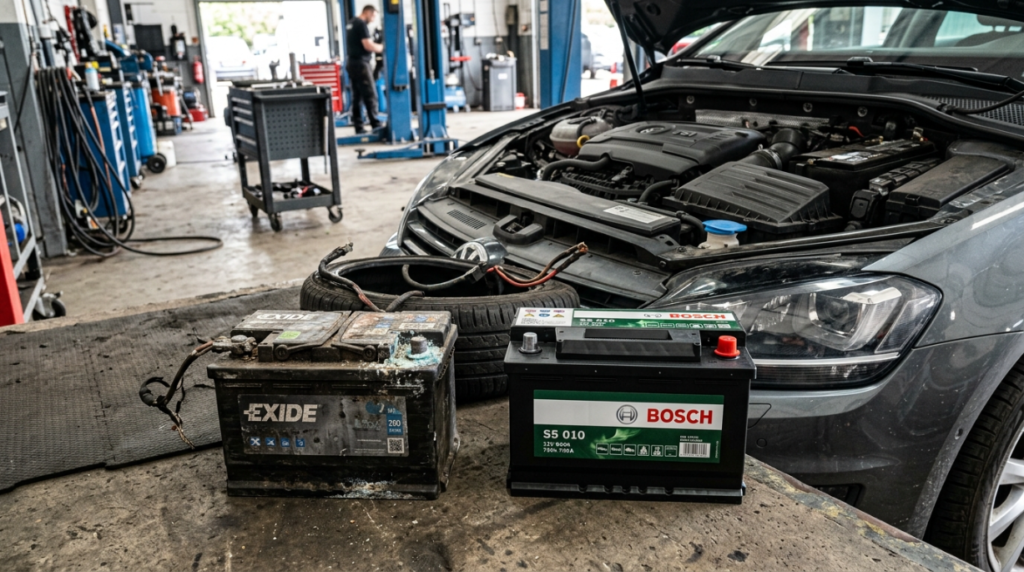
A weak car battery does not always need immediate replacement. Sometimes, a battery becomes low simply because the car has been parked for a long time, used for very short trips, or has had its lights left on.
However, recharging is not a permanent solution when a battery is old, damaged, or unable to hold power. A battery that keeps going flat after charging may be reaching the end of its useful life.
Knowing the difference between a discharged battery and a worn-out battery can help drivers avoid unnecessary costs and sudden breakdowns.
When Should You Replace a Weak Battery?
The main question is whether the battery has lost its ability to hold and deliver enough power. A battery that is only discharged may work normally after a proper recharge. A worn battery may appear charged at first but quickly lose its power again.
Several signs can help you decide whether charging is enough or replacement is the better choice.
| Battery Condition | Recharge | Replace |
| Battery was drained because lights were left on | Usually suitable | Not normally needed |
| Car was parked for a long time | May be enough | Only if the battery is weak |
| Battery is still in good condition | Yes | No |
| Battery repeatedly loses charge | Usually not enough | Recommended after testing |
| Engine remains slow after charging | Not a long-term fix | May be needed |
| Battery cannot hold a charge | No | Yes |
| Battery is old and weak | Temporary solution | Better choice |
| Battery case is swollen or damaged | Do not recharge | Replace |
| Alternator is not charging properly | Charging alone will not fix it | Fix charging system first |
| Battery passes a health test but is low on charge | Yes | No |
The basic rule is simple: if the battery is healthy but only discharged, recharging may solve the problem. If it is old, damaged, repeatedly going flat, or unable to hold a charge, replacement is usually the better option.
1. The Battery Keeps Going Flat
A battery that becomes flat once does not always need replacement. For example, leaving the headlights or interior lights on overnight can drain a healthy battery. After a proper recharge, it may return to normal operation.
The situation is different when the battery keeps going flat without an obvious reason. Repeated discharge can mean that the battery cannot hold its charge properly.
An electrical drain or alternator problem can also cause the same issue. Both the battery and charging system should be tested before deciding on replacement.
2. The Battery Is Already Old
Battery age is an important factor when deciding between charging and replacement. As a battery gets older, its internal parts slowly lose their ability to store energy and provide strong starting power.
A recharge can restore the charge level, but it cannot reverse normal battery wear. If an older battery is showing weak starting performance or failing tests, replacing it is usually more practical than repeatedly recharging it.
Dubai’s high temperatures can also place extra stress on batteries, which makes regular testing more useful for older vehicles.
3. The Engine Still Starts Slowly After Charging
A healthy battery should provide enough power to turn the engine over quickly. If the engine remains slow to start even after the battery has been fully charged, the battery may have lost part of its starting capacity.
Slow cranking can also be caused by a faulty starter, poor cable connections, or another electrical problem. This is why testing is important. If the battery test shows poor starting power despite having a full charge, replacement may be a better option than another recharge.
4. The Battery Cannot Hold Its Charge
One of the clearest signs of a worn battery is a rapid loss of charge. A battery may show a normal voltage shortly after charging but then become weak again after sitting for a short period.
This happens when the battery’s internal condition has deteriorated. Charging can temporarily add energy, but it cannot restore lost capacity. If the battery repeatedly loses its charge even when the vehicle is not being used, it should be tested.
A technician can determine whether the battery itself is failing or whether another part of the vehicle is draining it.
5. You Need Frequent Jump-Starts
Jump-starting a vehicle can be useful in an emergency, but needing it again and again is a warning sign. A healthy battery should not regularly require outside power to start the engine.
Repeated jump-starts may indicate an aging battery, charging problem, or electrical drain. If the battery has been properly charged but still cannot start the vehicle reliably, replacement may be necessary.
Continuing to depend on jump-starts can also leave you stranded at an inconvenient time, especially if the battery finally loses all remaining capacity.
When Is Recharging Enough?
Recharging can be suitable when the battery is still in good condition but has lost charge for a temporary reason. This can happen after the car has been parked for a long period or when an electrical feature has accidentally been left on.
A proper recharge may restore normal performance if the battery can still hold power. However, the cause of the discharge should also be checked.
If the battery becomes flat again soon after charging, there may be a deeper problem. The alternator, electrical system, and battery should then be inspected rather than simply charging it again.
When Is Battery Replacement the Better Choice?
Replacement is generally the better option when the battery is old, physically damaged, repeatedly failing, or unable to hold a charge. A battery that fails a proper health test is unlikely to become reliable simply through more charging.
For drivers who need car battery replacement in Dubai, Sayara Battery can check the battery and help determine whether it needs charging or replacement. Choosing the correct battery for the vehicle is also important because different cars have different power and battery requirements.
Replacing a weak battery at the right time can prevent repeated jump-starts and reduce the chance of being left with a car that will not start.
How to Avoid Recharging the Same Weak Battery Again and Again
Repeated charging may seem cheaper than replacement, but it can become frustrating if the battery does not remain reliable. Before charging the battery again, consider why it became weak.
Check whether the car was left unused for a long time, whether lights or accessories were left on, and whether the alternator is working properly. If none of these explain the problem, the battery itself may be worn out.
A proper battery test can save time by showing whether another recharge is useful or whether replacement is the more sensible option.
Conclusion
Recharging is useful when a healthy battery has simply lost its charge. It is not a permanent fix for a battery that is old, damaged, unable to hold power, or repeatedly failing.
Drivers should look at battery age, starting performance, test results, and how often the battery becomes flat. The alternator and electrical system should also be checked when charging problems continue.
Making the right choice between recharging and replacement can improve reliability and help prevent unexpected starting problems.