

Abu Dhabi Administrative fines were imposed on a private notary for violating the laws, the decisions, and the regulatory measures regulating the notary profession, for an amount of AED 30,000 in administrative fines. The case has raised doubts as to why the fine is imposed, if AED 30,000 is the standard punishment for private notaries, and what other punishments might be applied against private notaries offending professionally. The UAE’s current system of administrative penalties could result in a variety of penalties for various offenses and harsher penalties for serious or repeated violations.
This guide covers the fine for performing a private notary service in Abu Dhabi, how the AED 30,000 fine was determined, what the UAE’s fine rules say, and what penalties may be faced as a private notary.
What is the Abu Dhabi Private Notary Fine?
Abu Dhabi Private Notary fine is an administrative fine imposed on a licensed private notary for not adhering to the notary laws, regulations, or the requirements of the profession in the UAE in Abu Dhabi. These penalties vary with the current UAE administrative penalties framework and are a response to the type of infraction.
A private notary was fined AED 30,000 in April 2026 for non-compliance with the rules regarding the profession in Abu Dhabi. That said, AED 30,000 isn’t a flat fine for every breach.
Abu Dhabi Private Notary Fine Schedule
A long list of administrative violations and fines appears in Cabinet Resolution No. 146 of 2025. Some of the main examples are below.
| Example of violation | Administrative fine |
| Failure to verify identity, legal capacity, status or consent of the parties | AED 20,000 |
| Failure to read the transaction and explain its legal effects, or properly record that explanation | AED 10,000 |
| Failure to follow procedures for transactions involving persons with special circumstances | AED 15,000 |
| Certain errors in correcting material clerical or arithmetic mistakes | AED 5,000 |
| Failure to prepare, sign, seal or deliver required minutes | AED 10,000 |
| Issuing certain register certificates to unauthorised persons | AED 20,000 |
| Improper handling of affidavits made under oath | AED 20,000 |
| Notarising signatures without recording the notarisation in the register | AED 10,000 |
| Failure to maintain the required transaction register | AED 20,000 |
| Failure to retain original instruments or supporting documents as required | AED 20,000 |
| Certain prohibited notarisation involving lack of legal capacity, consent or an unlawful/void transaction | AED 30,000 |
| Notarising certain instruments relating to Muslim personal status | AED 30,000 |
| Notarising certain Waqf instruments | AED 30,000 |
| Notarising certain instruments concerning ownership or real rights over immovable property | AED 30,000 |
| Undertaking a transaction involving a prohibited personal interest/conflict | AED 30,000 |
| Disclosing certain information obtained through professional work | AED 20,000 |
| Removing registers, instruments, or official papers from the office in violation of the rules | AED 10,000 |
| Practising through an unlicensed office or law firm in the specified circumstances | AED 5,000 |
| Practising as a private notary before taking the required legal oath | AED 5,000 |
These are examples provided within the official administrative penalty schedule, which are not intended as, nor a replacement for, a full reading of the corresponding legislation of a case.
What Is Cabinet Resolution No. 146 of 2025?
The UAE’s Cabinet Resolution 146 of 2025 is an administrative-penalty resolution that sets out measures for acts committed in violation of federal decree-law No. 20 of 2022, on the regulation of the notary profession and its Executive Regulations.
The resolution was issued on 31 October 2025 and published in the Official Gazette on 14 November 2025, and took effect on November 15th of 2025. It continues to be registered on the UAE legislation portal.
Article 3 is the key part to read, as it links each violation to its fine.
What Happens If a Private Notary Violates the Rules?
In any case, the violation does not necessarily result in the same fine being meted out to the private notary.
The Committee has the authority to levy the enumerated administrative fine, pursuant to Article 3 of Cabinet Resolution No. 146 of 2025, for the commission of a listed violation. Certain other administrative measures are, however, permitted as part of the resolution, such as:
- A written warning
- Licence revocation
The Committee reserves the right to double any administrative fine for recidivism within one year of the date of the administrative fine, based on the Committee’s resolution.
Who Regulates Private Notaries in Abu Dhabi?
The Abu Dhabi Judicial Department (ADJD) is the authority that licenses and supervises notaries in Abu Dhabi.
The ADJD provides that any notary public can consist of a public notary, private notary, or governmental notary appointed by the Department to act as a notary.
Can the Abu Dhabi Private Notary Fine Be Challenged?
Usually, yes – check your penalty notice for how and when to file a grievance.
The notification to the violator about a decision on an administrative penalty, as specified in Article 4 of the Cabinet Resolution No. 146 of 2025, is required to be made either by email or in other appropriate manner within 15 days after the date of issuance.
How to Pay Abu Dhabi Private Notaries Fine
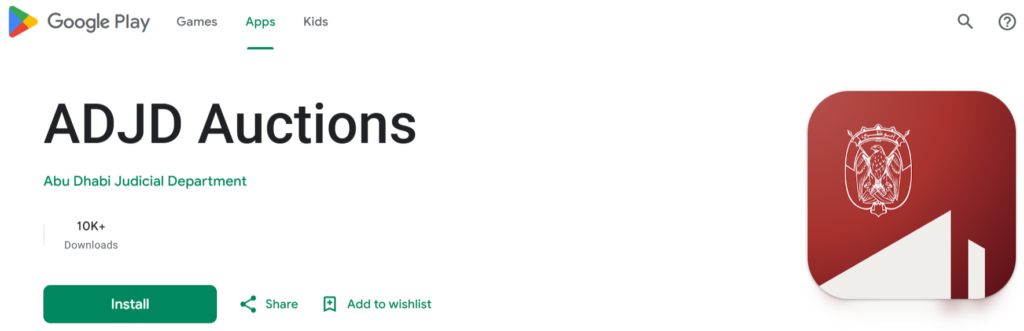
Step 1: Visit the ADJD App
Download the official Abu Dhabi Judicial Department (ADJD) App and proceed to the desired online fine payment service.
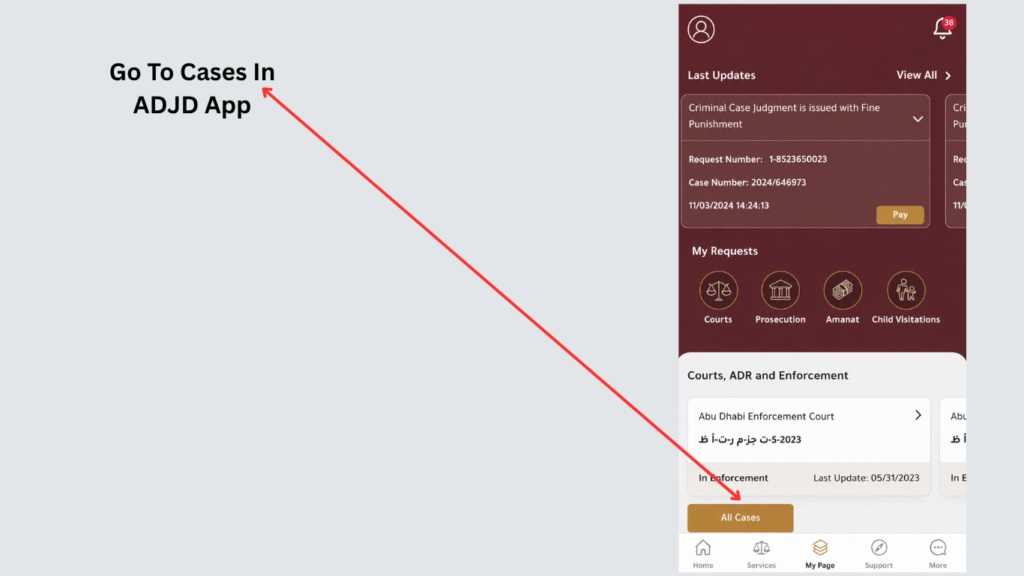
Step 2: Select fine Payment
Click on fine services.
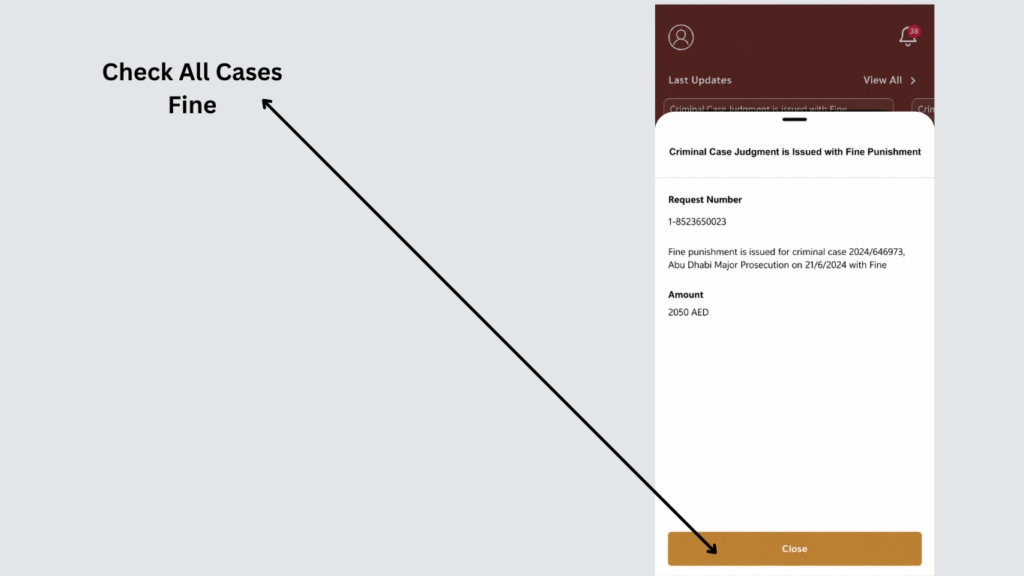
Step 3: Enter Fine Details
Fill out either the case number, fine number, or the transaction number that appears on your official notification and locate the penalty history.
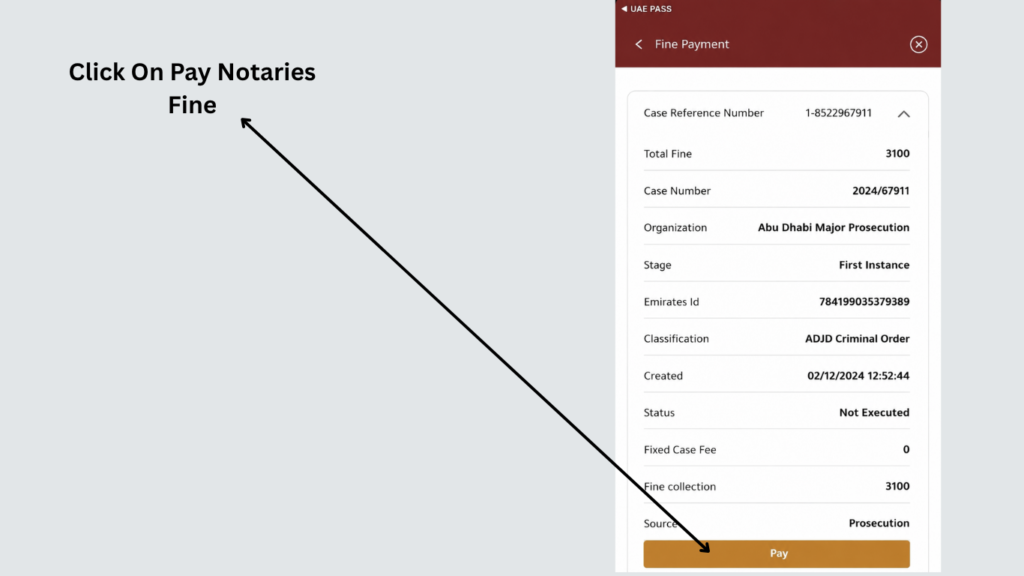
Step 4: Verify the Information
Read and review the fine details and penalty thoroughly before you pay.
Step 5: Make the Payment
Select payment option and complete the payment process using the official ADJD payment system.
Step 6: Save the Receipt
Once payment has been made successfully, record and save or download a receipt and confirmation number.
What Should a Private Notary Do to Avoid Fines?
The easiest way to prevent getting a fine from a private notary in Abu Dhabi is through adherence to the laws, rules, and professional standards that have been outlined in that jurisdiction.
A private notary should:
Verify Every Party Carefully
Provide documentation of identity and legal capacity, and consent as necessary.
Explain the Transaction
Read and interpret the transaction and the legal implications of the same according to the applicable requirements.
Maintain Accurate Records
Maintain registers, original instruments, and supporting documents as specified by law.
Respect the Scope of Authority
Avoid notarization of acts outside the jurisdiction of the private notary.
Read Also: What Is WPS in Qatar? Rules, Salary Process & Fines
Other Abu Dhabi guides: external fines in Abu Dhabi and Abu Dhabi police clearance certificate.
Final Word
In a case reported in April 2026, a private notary in Abu Dhabi was slapped with an AED 30,000 fine. But don’t assume every violation carries the same AED 30,000 fine. The appropriate punishment will be determined by the nature of the misbehaviour and the relevant law.
The UAE Legislation portal and the Abu Dhabi Judicial Department are the best sources for current legislation. Of special interest is Cabinet Resolution No. 146 of 2025, which allows the current administrative-penalty system for specified violations.