Last updated: September 2026 – deadlines, coverage and penalties added from Law No. 1 of 2015.
Have you ever wondered how the employees safely and on time get their salaries every month in Qatar? Qatar’s Wage Protection System (WPS), a government-backed electronic salary transfers system, was introduced to help pay workers’ wages fairly, transparently, and on time. It can help safeguard employees’ financial rights, as well as ease the burden on employers to meet Qatar labor law obligations.
This comprehensive guide will explain what WPS is about, its workings, the reason for its implementation, its legal significance, its advantages to the employees and employers, rules, penalties, and common questions asked.
What is WPS in Qatar?
Qatar’s WPS was introduced by Law No. 1 of 2015, which amended the Labour Law and took effect that year. Every month, employers upload a Salary Information File (SIF) through their bank listing each worker’s basic pay, allowances, overtime and deductions. The ministry’s WPS unit checks the data, and if wages are late or short it can flag the company – leading to inspections, blocked services and fines.
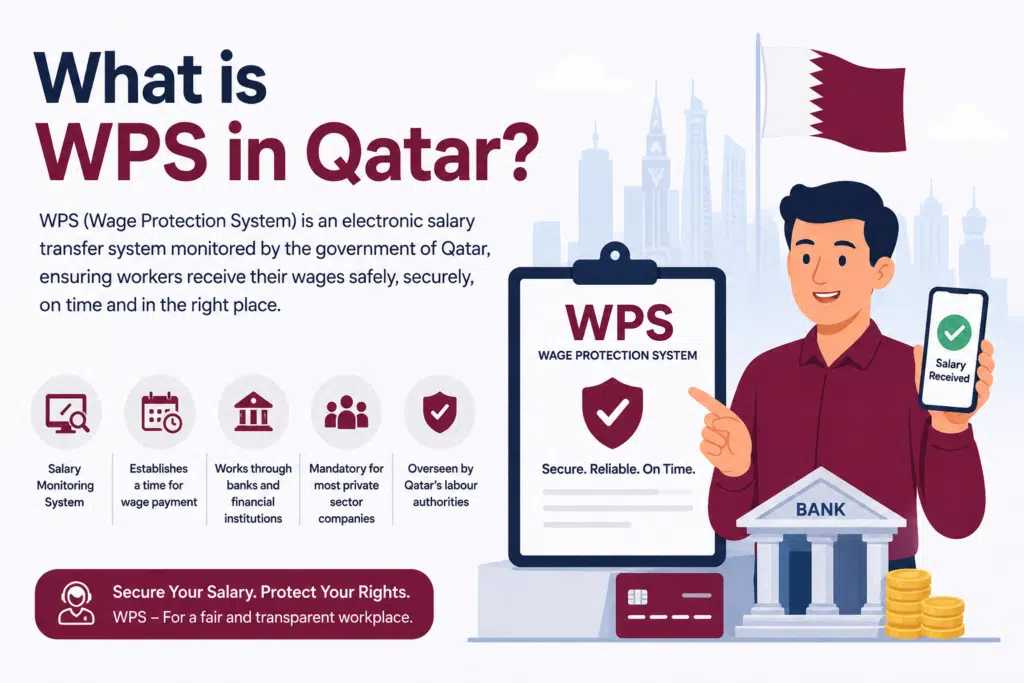
WPS (Wage Protection System) is an electronic salary transfer system monitored by the government of Qatar, which provides a secure and reliable way for workers to get their wages safely and securely at the right time and place from an authorized financial institution (AFI).
In simple terms:
- This is a Salary Monitoring system.
- It establishes a time for wage payment.
- It works through banks and financial institutions
- It is mandatory for most private sector companies
The system is overseen by Qatar’s labour authorities, along with financial institutions and banks. Salaries are transferred to workers’ accounts by banks and exchange houses licensed in Qatar, and each payment is reported back to the ministry.
How Does WPS Work in Qatar?
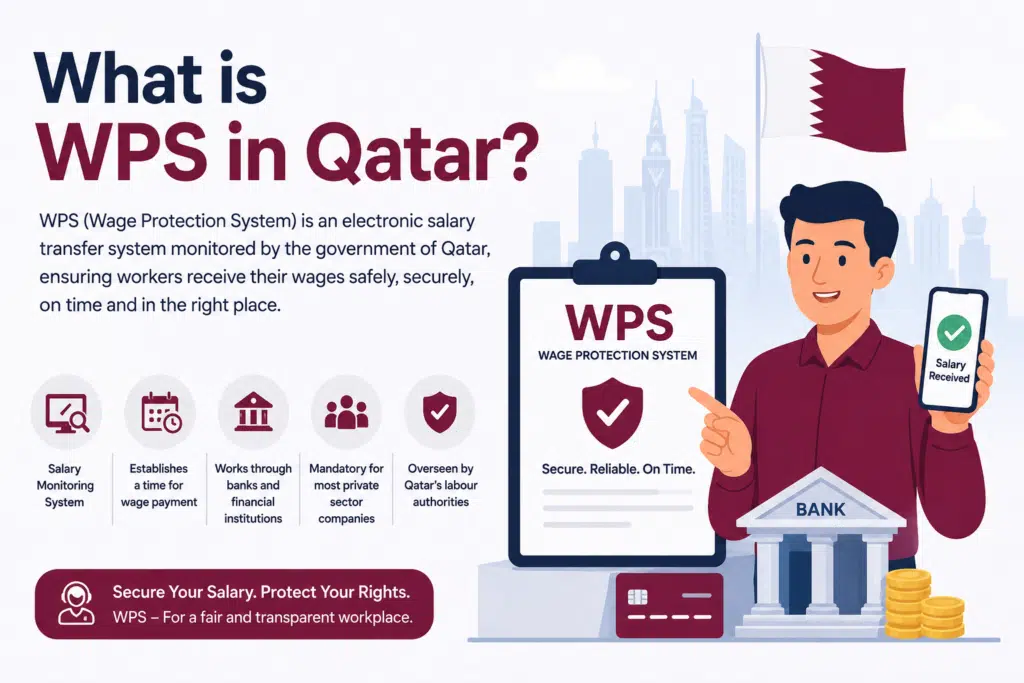
The Wage Protection System is based on a simple, automatic, and constant mechanism.
Step 1: Employee Joins a Company
The employer records information about a worker when the person starts work.
These details include:
- Employee name
- Salary amount
- Contract information
- Bank account information
Step 2: Salary Details Are Recorded
Employers load payroll data into their salary management system.
The information must be indicative of what is found in the employee’s employment contract.
Step 3: Employer Transfers Salary Through Approved Banks
Employers do not conventionally pay wages, but they pass them on via established banks and financial institutions.
This creates an official payment record.
Step 4: Payment Data Is Submitted Through WPS
The employer submits salary payment information through the Wage Protection System.
This will then allow authorities to determine whether salaries were paid correctly and on time.
Step 5: Government Authorities Monitor Compliance
The system can track payments on these salaries on a basis of thousands of enterprises.
Should violations be uncovered, additional investigation may be undertaken.
Who Must Follow WPS in Qatar?
The Wage Protection System generally applies to private-sector employers operating in Qatar.
Private Sector Companies
Most private companies are required to comply with WPS regulations.
Employers
Employers must process salary payments through approved channels and maintain accurate payroll records.
Foreign Workers
Expatriate workers are among the primary beneficiaries of the system.
WPS helps ensure foreign employees receive wages according to their contracts.
Local Employees
WPS covers workers under the Labour Law; domestic workers, government staff, military and police, and farm workers fall outside it.
WPS Rules in Qatar
Employers should follow the tight rules in the Qatar salary payment section of WPS:
- All salaries to be paid through approved Banks only.
- Employers will need to register within the WPS system.
- Each month, employers submit a Salary Information File (SIF) through their bank, and wages must reach workers within seven days of the due date.
- Salary payments are monitored very carefully to ensure they are not delayed.
- Failure to comply with this duty can lead to labour inspections.
- Employers are required to pay the full salaries without unjustified deductions.
It’s part of Qatar’s efforts to respect the rights of workers and ensure fair working practices.
Penalties for Not Following WPS in Qatar
If an employer does not follow WPS policies, it could have serious consequences:
- Fines of QR 2,000–6,000 per worker, up to a month in jail, or both
- Blocking of most company transactions with the Ministry of Labour
- Blocking of new work permits
- Restrictions on hiring new employees
- Legal action under the Qatar labor law
These penalties give employers a strong reason to pay on time, every month.
Which Companies Must Follow WPS?
WPS is obligatory in most private sector companies in Qatar, particularly:
- Private companies
- Construction firms
- Labor-intensive industries
- Cleaning and maintenance services
- Hospitality and service sector companies
Any company employing workers under Qatar labor law is generally required to comply with WPS salary transfer rules.
Frequently Asked Questions (FAQs)
What is the WPS salary system in Qatar?
WPS is an e-salary transfer system under the government that tracks whether employees are paid in full and on time through approved banks.
Is WPS Mandatory In Qatar?
Yes, WPS will be required for most private sector companies that fall under the Qatar labour law.
What safety measures does WPS employ to ensure employee safety?
This guarantees that staff are compensated completely, timely, and by clear banks, minimizing the probability of fraud.
Which banks do you see supporting WPS in Qatar?
The majority of banks in Qatar are part of the WPS network, and the banks have been approved to process salaries.
Read Also: Check Qatar Health Card Expiry Online (QID Guide)
Working in Qatar? See how to calculate gratuity in Qatar, and compare with the Wage Protection System in Oman. You may also need to check and pay Qatar traffic violations before travelling.
More for workers in Qatar: how to get a Qatar residency permit, the QCHP licence for healthcare professionals, online schooling options for expat families, and how to check your Ooredoo Aamali balance on a business line.
Final Words
The Wage Protection System (WPS) in Qatar is an important component of the country’s labor market system that aims to safeguard employee rights and promote fairness and equal pay distribution. It offers a safe, clear, and legalized salary payment option for both employees and employers.
Knowing what is WPS in Qatar means can be crucial for anyone working in the country, affecting not just their incomes but also legal matters and workplace equity. Qatar’s employment system continues to be enhanced, and trust between employers and workers is rising thanks to the strict enforcement of regulations by the labour authorities.