
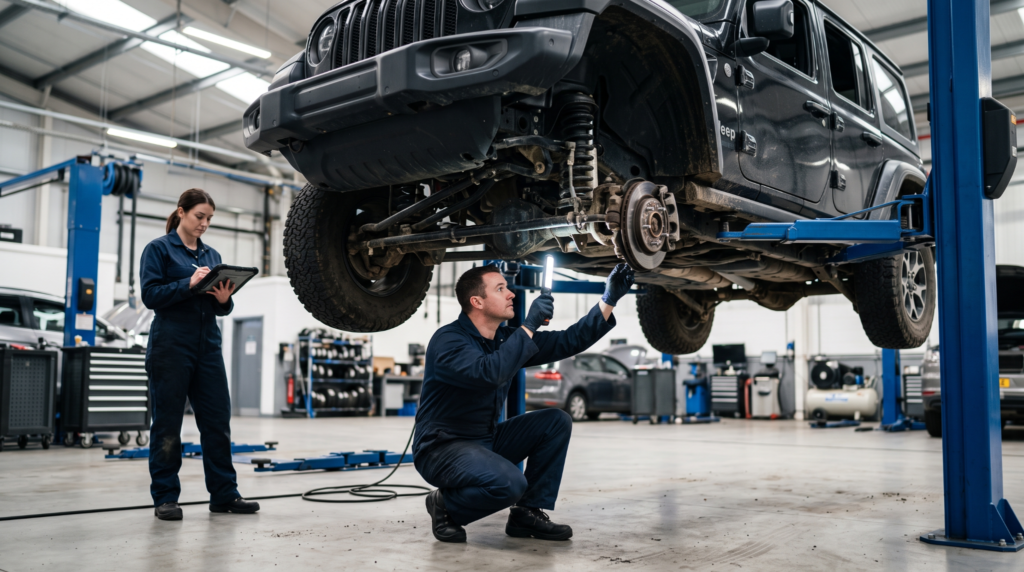
Your Jeep is built to handle city roads, rough tracks, and off-road adventures. However, no suspension system lasts forever. Daily driving, desert sand, high temperatures, and rough roads in Abu Dhabi can wear out important suspension parts over time.
Ignoring these problems can reduce driving comfort, affect steering, and even become a safety risk. Some of the most common Jeep suspension problems include worn shock absorbers, damaged bushings, wheel misalignment, and worn ball joints.
Other issues include Jeep Death Wobble, sagging coil springs, worn sway bar links, track bar wear, and damaged control arms. Recognizing these warning signs early helps prevent expensive repairs and keeps your Jeep safe to drive.
Since many suspension issues require proper diagnosis and specialized tools, it is always best to have your vehicle inspected by experienced technicians. If you are looking for reliable Jeep service in Musaffah, Exotic Auto Services offers professional suspension inspections and repairs to help identify and fix these problems before they worsen.
Why Should You Never Ignore Common Jeep Suspension Problems
Common Jeep suspension problems often begin with small warning signs that many drivers overlook. A slight vibration, unusual noise, or extra bouncing may seem harmless at first, but these issues can quickly affect steering, braking, tire wear, and overall vehicle stability.
The hot weather in Abu Dhabi, combined with frequent speed bumps, rough roads, and desert driving, places extra stress on suspension components.
Regular inspections help identify worn parts before they cause more damage and increase repair costs.
How Abu Dhabi’s Driving Conditions Affect Jeep Suspension?
Jeep vehicles are designed for challenging conditions, but the UAE climate can still shorten the life of suspension components. High road temperatures cause rubber parts to dry out and crack, while fine desert sand enters moving joints and increases wear.
Frequent speed bumps, potholes, and occasional off-road trips also place constant pressure on shocks, springs, and steering components. Over time, these conditions reduce suspension performance and make regular maintenance even more important.
Jeep Suspension Problems at a Glance
| Suspension Problem | Common Symptoms | Recommended Solution |
| Worn Shock Absorbers | Bouncing, poor handling | Replace shocks and check alignment |
| Damaged Bushings | Clunking, vibration | Replace worn bushings |
| Wheel Misalignment | Pulling, uneven tire wear | Perform wheel alignment |
| Worn Ball Joints | Loose steering, knocking | Replace ball joints |
| Jeep Death Wobble | Violent steering shake | Inspect track bar and steering parts |
| Sagging Coil Springs | Low ride height | Replace coil springs |
| Worn Sway Bar Links | Body roll, knocking | Replace sway bar links |
| Track Bar Wear | Steering play | Replace or repair track bar mount |
| Damaged Control Arms | Poor handling | Replace damaged control arms |
Most Common Jeep Suspension Problems & Solutions
Here are some common Jeep suspension problems you should never ignore:
1. Worn Shock Absorbers
Shock absorbers help control your Jeep’s movement after driving over bumps or uneven roads. They keep the tires in contact with the road and improve braking and handling.
In Abu Dhabi, high temperatures can cause the oil and seals inside the shocks to wear out faster, reducing their ability to absorb impacts properly.
Common Signs
- Excessive bouncing after speed bumps
- Longer stopping distance
- Fluid leaking from the shock body
- Rough or uncomfortable ride
- Uneven tire wear
Solution
Replace worn or leaking shock absorbers as soon as possible. It is also recommended to inspect both front and rear shocks together because uneven wear affects vehicle balance. After replacement, perform a wheel alignment to restore proper handling and extend tire life.
2. Damaged Suspension Bushings
Suspension bushings are rubber components that reduce vibration and allow suspension parts to move smoothly. Constant exposure to extreme heat causes these rubber parts to dry out, crack, and lose flexibility much faster than normal.
Common Signs
- Clunking noises over bumps
- Steering vibration
- Squeaking sounds
- Loose suspension feel
- Uneven tire wear
Solution
Replace worn or cracked bushings before they damage nearby suspension components. During replacement, inspect the control arms and mounting points for additional wear. Quality replacement bushings improve ride comfort and restore proper suspension movement.
3. Wheel Misalignment
Wheel alignment changes gradually as suspension parts wear or after hitting potholes and speed bumps. Poor alignment affects steering, tire wear, and overall driving stability.
Common Signs
- Jeep pulls to one side
- Crooked steering wheel
- Uneven tire wear
- Reduced fuel efficiency
- Steering feels unstable
Solution
A professional wheel alignment should be carried out whenever alignment problems appear or after replacing suspension parts. Proper alignment improves steering response, reduces tire wear, and helps the suspension operate correctly.
4. Worn Ball Joints
Ball joints connect the steering knuckle to the control arms and allow the wheels to move smoothly while steering. Torn rubber boots allow sand and dust to enter the joint, causing faster wear inside the component.
Common Signs
- Loose steering
- Knocking noises
- Uneven tire wear
- Front-end vibration
- Poor steering response
Solution
Replace worn ball joints immediately to prevent steering failure. During replacement, technicians should inspect nearby steering components for additional wear. Early repairs help avoid more expensive suspension damage.
5. Jeep Death Wobble
Jeep Death Wobble is one of the most serious suspension problems. It causes violent shaking of the steering wheel after driving over bumps, usually at higher speeds. The issue is often linked to worn steering and suspension components rather than a single failed part.
Common Signs
- Steering wheel shakes violently
- Vehicle becomes difficult to control
- Shaking starts after hitting bumps
- Steering improves after slowing down
- Front-end vibration
Solution
A complete suspension inspection is needed to identify the exact cause. The repair may include replacing worn track bars, bushings, steering stabilizers, tie rod ends, or ball joints. A wheel alignment should also be performed after repairs.
6. Sagging Coil Springs
Coil springs support the Jeep’s weight and maintain proper ride height. Carrying heavy equipment, towing, or frequent off-road driving can weaken the springs over time.
Common Signs
- Vehicle sits lower than normal
- Reduced ground clearance
- Bottoming out over bumps
- Uneven ride height
- Poor handling
Solution
Replace weak or damaged coil springs with quality replacements that match your Jeep model. If heavy accessories have been installed, upgraded springs may be recommended to support the additional weight safely.
7. Worn Sway Bar Links
Sway bar links connect the sway bar to the suspension and help reduce body roll when turning. As these parts wear out, the Jeep becomes less stable during cornering.
Common Signs
- Knocking noises
- Excessive body roll
- Poor cornering stability
- Steering feels less responsive
- Dashboard sway bar warning on some models
Solution
Replace worn sway bar links and inspect the sway bar bushings at the same time. If your Jeep uses an electronic sway bar disconnect system, the actuator should also be checked for proper operation.
8. Track Bar Wear
The track bar keeps the front axle properly positioned under the vehicle. Over time, worn bushings or damaged mounting holes allow unwanted movement, leading to steering problems.
Common Signs
- Loose steering
- Popping sounds while turning
- Steering wheel movement
- Recurring wobble
- Poor highway stability
Solution
Replace worn track bars and inspect the mounting brackets carefully. If the mounting holes have become enlarged, they should be repaired or reinforced before installing new components to prevent the problem from returning.
9. Damaged Control Arms
Control arms connect the suspension system to the vehicle frame and help maintain proper wheel movement. Rough roads and repeated impacts can bend or damage these components over time.
Common Signs
- Vehicle pulls during braking
- Uneven tire wear
- Clunking noises
- Poor steering control
- Suspension feels unstable
Solution
Replace bent or damaged control arms immediately. The mounting brackets should also be inspected for cracks or damage. Once repairs are complete, a wheel alignment should be performed to restore proper suspension geometry.
Tips to Keep Your Jeep Suspension in Good Condition
Proper maintenance helps extend the life of your suspension system, improves driving comfort, and reduces the risk of unexpected repairs.
- Inspect the Suspension Regularly: Have your suspension checked during every scheduled service to identify worn parts before they become major repair problems.
- Rotate and Balance Your Tires: Regular tire rotation and balancing promote even tire wear and reduce unnecessary stress on suspension components.
- Check Wheel Alignment: Inspect the wheel alignment after hitting potholes or large speed bumps to maintain stable handling and protect your tires.
- Replace Worn Bushings Early: Change cracked or worn bushings promptly to prevent additional wear on nearby suspension and steering components.
- Clean the Underside After Off-Road Driving: Wash away sand, mud, and dirt to reduce wear on ball joints, bushings, and other moving parts.
- Avoid Carrying Excess Weight: Remove unnecessary heavy items because extra weight increases pressure on springs, shocks, and suspension components over time.
- Inspect Ball Joints and Steering Components: Regular inspections help detect looseness or wear early, preventing expensive repairs and improving driving safety.
- Replace Leaking Shock Absorbers Quickly: Worn or leaking shocks reduce vehicle stability, increase braking distance, and affect overall ride comfort.
- Choose Quality Replacement Parts: Always use high-quality suspension components that match your Jeep model for better durability, safety, and long-term performance.
When Should You Visit a Jeep Suspension Specialist?
Many suspension problems cannot be identified through a simple visual inspection. Professional workshops use advanced diagnostic equipment to inspect steering parts, suspension joints, bushings, shocks, springs, and wheel alignment.
If you notice clunking noises, loose steering, uneven tire wear, excessive bouncing, or vibration while driving, it is best to arrange an inspection as soon as possible. Early diagnosis prevents further damage and helps keep repair costs lower.
Conclusion
A healthy suspension system is essential for safe and comfortable driving. Problems such as worn shocks, damaged bushings, loose ball joints, wheel misalignment, Jeep Death Wobble, sagging springs, worn sway bar links, track bar wear, and damaged control arms should never be ignored.
Fixing these issues early improves handling, protects your tires, and helps avoid expensive repairs. If you notice any of these common Jeep suspension problems, it is important to have your vehicle inspected by experienced professionals.
For reliable Jeep service Abu Dhabi, Exotic Auto Services provides expert suspension diagnostics, quality repairs, and professional maintenance to keep your Jeep performing at its best on both city roads and off-road adventures.