
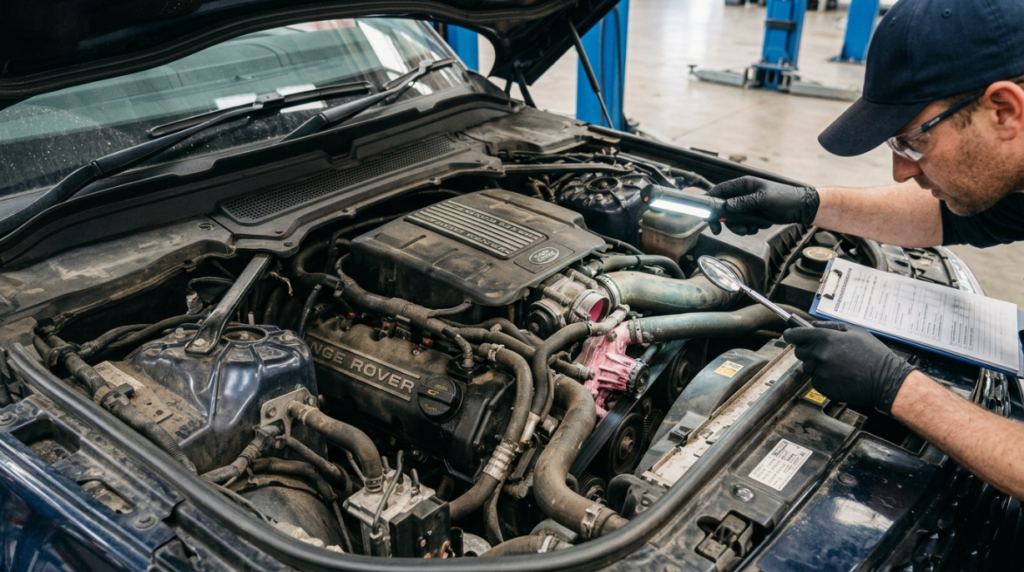
Buying a used luxury SUV can be exciting because you get comfort, strong performance, and advanced features at a lower price. However, a clean body and smooth test drive do not always mean the vehicle is in good condition.
Hidden problems can include worn suspension parts, weak brakes, engine oil leaks, transmission faults, electrical issues, and signs of accident damage.
Buyers should also check the cooling system, air conditioning, tires, and service history before making a final decision. A careful pre-purchase car inspection in Dubai can help find costly faults before you pay for the vehicle.
Hidden Problems to Check Before Buying a Used Luxury SUV
1. Engine Oil Leaks and Poor Engine Condition
The engine is one of the most important parts to check in a used luxury SUV. A vehicle may look perfect outside while having oil leaks or internal engine wear. Look under the engine bay and around the parking area for dark oil spots. Check for oil around the valve cover, oil pan, and other seals.
During a test drive, listen for knocking, tapping, or unusual engine sounds. Blue smoke from the exhaust can also point to an engine problem. If the engine feels weak, shakes at idle, or takes longer to start, it needs further testing before purchase.
2. Automatic Transmission Problems
Luxury SUVs often use advanced automatic or dual-clutch transmissions. These systems can be expensive to repair when they develop faults. A used SUV may have hidden transmission wear even if the gear changes seem normal during a short drive.
Pay attention to delayed gear changes, hard shifts, jerking, slipping, or strange sounds. Check if the vehicle moves smoothly when changing from reverse to drive. Transmission fluid should also be checked where the design allows it. A missing service record for transmission fluid can be a warning sign, especially on a high-mileage SUV.
3. Worn Air Suspension and Other Suspension Parts
Many luxury SUVs use air suspension to provide a smooth ride and adjustable ground clearance. While this system gives excellent comfort, its parts can be costly when they fail. Air springs can develop leaks, while compressors, valves, and ride-height sensors can also wear out.
Park the SUV on a flat surface and check whether one side sits lower than the other. Listen for a compressor that runs for too long. During the test drive, notice any bouncing, uneven movement, or warning lights. A suspension fault may not be obvious during a quick drive, so a proper inspection is important.
4. Brake Wear and Expensive Brake Repairs
Luxury SUVs are heavy vehicles, so their braking systems work hard. Large brake discs and performance brake systems can also cost more to replace than those found on regular cars. A seller may replace only the most visible parts before listing the vehicle, while other worn components remain.
Check for vibration through the steering wheel when braking. Grinding sounds, squealing, or a soft brake pedal should not be ignored. Look at the condition of the discs and pads if they are visible. A brake inspection can help you estimate upcoming repair costs and avoid buying an SUV that needs immediate brake work.
5. Hidden Accident or Body Repair Damage
A shiny paint finish does not always mean an SUV has never been damaged. Luxury vehicles can be repaired after accidents and sold without clearly explaining their past. Poor repairs may later cause paint problems, water leaks, alignment issues, or electrical faults.
Look for differences in paint shade between body panels. Uneven gaps around doors, the hood, or the tailgate can also suggest previous repairs. Check inside the engine bay and luggage area for signs of replaced panels or unusual weld marks. A vehicle history report can provide useful information, but a physical inspection is still needed.
6. Electrical and Electronic Faults
Modern luxury SUVs depend on many electronic systems. These can include digital dashboards, parking sensors, cameras, adaptive lights, powered seats, keyless entry, climate controls, and driver assistance features. A small electrical fault can sometimes become a large repair bill.
Test every switch and feature before buying. Check the infotainment screen, speakers, cameras, parking sensors, power windows, seat controls, and dashboard warning lights. Start the vehicle several times to see if any warning message appears. A diagnostic scan can also help find stored fault codes that may not show during a normal test drive.
7. Cooling System Problems in Dubai Heat
The hot climate in Dubai can put extra stress on an SUV’s cooling system. A vehicle that has been driven for years in high temperatures may have worn hoses, a weak radiator, a tired water pump, or a damaged cooling fan. These faults can become serious if the engine overheats.
Check the coolant level and look for leaks around the radiator and hoses. During the test drive, watch the temperature gauge and make sure it stays within the normal range. The cooling fan should also operate correctly when needed. Any history of overheating should be treated as a major warning.
8. Air Conditioning and Climate Control Issues
A luxury SUV should provide strong and even cooling, especially when used in Dubai. However, air conditioning parts can wear with age. Weak cooling may be caused by low refrigerant, a damaged compressor, blocked filters, electrical faults, or problems with the climate control system.
Test the AC from the front and rear seats if the SUV has separate rear controls. Make sure all vents produce cold air and that the fan works at different speeds. Listen for clicking or grinding sounds when the AC is switched on. A weak AC system can become expensive if the compressor or other major parts need replacement.
Check the Tires, Wheels, and Alignment
Tires can reveal a lot about the condition of a used luxury SUV. Uneven tire wear may point to poor wheel alignment, worn suspension parts, or incorrect tire pressure. Luxury SUVs also often use large wheels and premium tires, which can make replacement costly.
Check all four tires for uneven wear, cracks, bulges, and low tread depth. Compare the tire brands and sizes to make sure they match the vehicle’s requirements. During the test drive, notice if the SUV pulls to one side or if the steering wheel shakes. These signs may indicate alignment or suspension issues.
Review the Service and Maintenance History
A detailed service history can make it easier to understand how the SUV was treated by its previous owner.
Regular oil changes, brake work, transmission service, cooling system checks, and scheduled maintenance show that the vehicle received proper care. Do not rely only on verbal claims from the seller. Ask for service invoices, workshop records, and previous inspection reports where available.
Check whether major services were completed at the correct mileage. A low-mileage luxury SUV with poor maintenance can be a bigger risk than a higher-mileage vehicle with a strong service record.
Watch for Warning Signs During the Test Drive
A test drive should be more than a short trip around the block. Try the SUV at different speeds and on different road surfaces. Pay attention to how the engine, gearbox, steering, brakes, and suspension behave.
Some useful signs to watch for include:
- Delayed or rough gear changes
- Steering vibration at higher speeds
- Suspension noises over bumps
- Brake vibration or grinding
- Engine hesitation during acceleration
- Warning lights on the dashboard
- Uneven cooling from the AC
- Unusual smells or smoke
These signs do not always confirm a major fault, but they show that the SUV needs closer attention.
Final Thoughts
A used luxury SUV can offer excellent comfort and performance, but buyers should look beyond its clean appearance. Engine leaks, transmission wear, air suspension faults, brake problems, accident repairs, electrical issues, cooling faults, and weak AC systems can all hide beneath a well-kept exterior.
Always check the service records and take the SUV for a proper test drive. More importantly, arrange a pre-purchase car inspection before making the final payment.
Finding a problem before buying is far better than discovering it after ownership begins. A careful check can help you choose a safer vehicle and avoid unexpected repair costs.